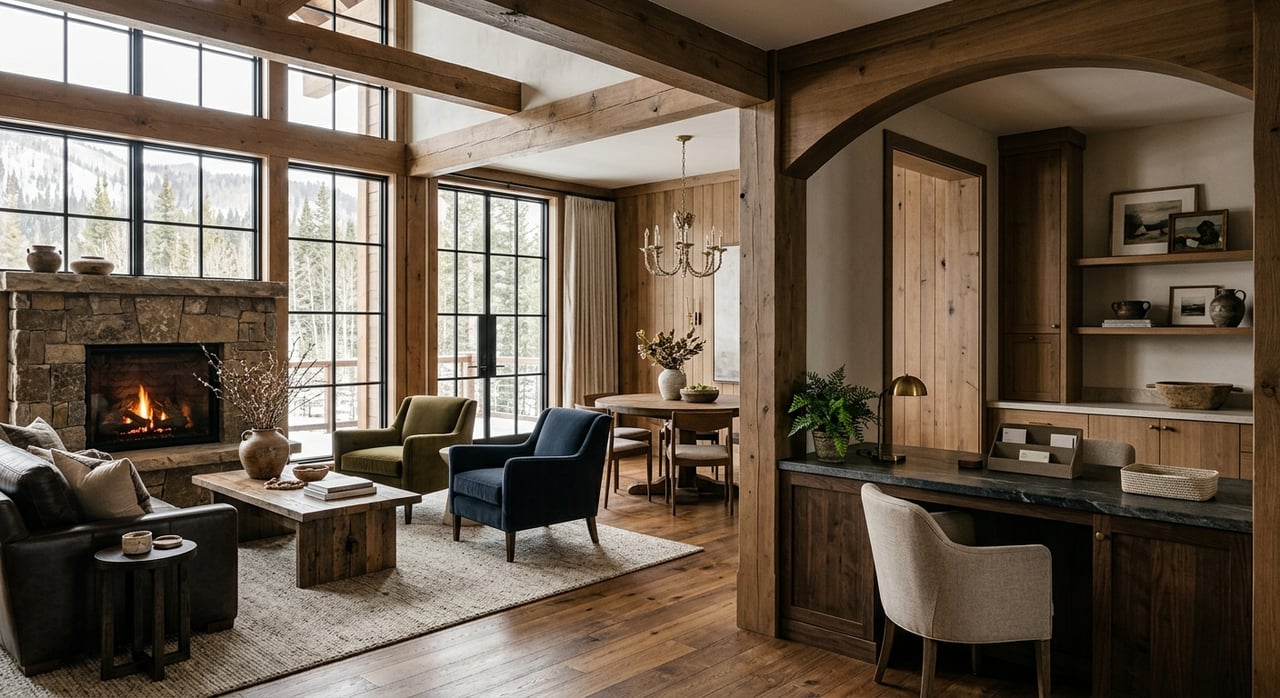
Amenities That Drive Absorption In McCall Resort Projects
July 16, 2026
July 16, 2026
What makes a resort project in McCall sell faster: a pretty brochure or an amenity plan buyers can actually use? In a four-season destination market, the answer is usually the second one. If you are evaluating a new development, planning a launch, or studying what drives buyer interest in McCall, it helps to look past the marketing language and focus on the amenities that support daily use, seasonal flexibility, and easy ownership. Let’s dive in.
McCall is not a market where amenities sit on the sidelines. The city’s downtown plan treats Payette Lake as McCall’s central asset and points to lake access and the lakefront recreation district as defining features of the community. That matters because buyers in resort markets often make decisions around how a property lives, not just how it looks on paper.
The March 2026 Intermountain MLS report adds context to that story. In the McCall-area single-family market, there were 9 sales at a median price of $949,000, while 2 new-construction sales closed at a median of $1,124,500. For that month’s new-construction sample, sold-through was 100%, which suggests buyers are still willing to pay for projects where the value proposition is clear and the amenity package is easy to understand.
In McCall, access tends to outperform ornament. Buyers are responding to amenities that connect them to the lake, trails, gathering places, and seasonal recreation in a direct, low-friction way. Decorative features may photograph well, but access-oriented amenities tend to hold more practical value.
That pattern aligns with local planning and visible projects on the ground. McCall’s public realm already emphasizes walkability, waterfront use, and connected recreation, so private resort projects are competing in a market where buyers already expect meaningful access and visible utility.
Water remains one of the strongest amenity drivers in McCall. Legacy Park serves as the city’s waterfront centerpiece with a beach, public dock, public boat ramp, splash pad, walking path, public art, volleyball court, restrooms, and open lawn space. That kind of public investment reinforces how central lake access is to the local lifestyle.
The city’s downtown master plan also identifies a formal lakefront boardwalk as a feature that can add commercial value, create a gathering place, and improve connections between Legacy Park, Art Roberts Park, shopping, lodging, and restaurants. As of June 24, 2026, the boardwalk project is under construction, which further signals that shoreline activation is not a side issue in McCall. It is a core part of how the market thinks about value.
For resort projects, the takeaway is simple. Amenities tied to water access, shoreline experience, or visible waterfront gathering tend to be easier for buyers to understand and easier for a project team to market.
Trail connectivity is another amenity type that appears to matter in McCall. The city’s subdivision code requires recreation land and trail corridors to connect meaningfully to major trail systems, parks, schools, shopping areas, and other community assets. It also recognizes trails identified in the McCall Area Pathways Master Plan for park-dedication credit.
That local requirement reflects broader community preference. The pathways plan was built on community input and found strong support for more pathway connections, which tells you trail access is not a niche preference. It is part of how people expect McCall to function.
In practical terms, trail systems also help a resort project perform across seasons. Ponderosa State Park, River Ranch, and Tamarack all emphasize trail-based recreation that works in summer and winter, including hiking, biking, Nordic skiing, and snowshoeing. In a market with pronounced seasonal swings, amenities that remain relevant outside peak summer tend to create a stronger ownership proposition.
When you step back and compare local examples, a few amenity categories stand out. The most effective projects are not offering random extras. They are bundling amenities into a coherent lifestyle package.
Water-facing projects have an obvious head start in McCall, but the details still matter. Buyers tend to respond to amenities that turn water access into something simple and repeatable.
Examples in the local market include:
The key is ease of use. If buyers can picture themselves getting to the water quickly and using it often, the amenity becomes part of the sales story rather than just a line item.
A strong trail network does more than add outdoor appeal. It expands how often an owner can use the property and helps support shoulder-season activity when boating or peak winter sports are not the main draw.
In McCall, trail amenities are especially effective when they connect outward rather than stopping at the property line. A trail loop within a project has value, but a trail corridor that links into broader recreation systems, parks, and town assets usually tells a more compelling story.
Resort buyers often want a place that works for both private retreat and shared experience. That makes gathering spaces more important than many project teams assume. A clubhouse, beach gathering area, fire-pit zone, pool deck, or barbecue area can do real work in helping buyers imagine how the property fits family use, guest use, and repeat visits.
Local examples reinforce this point. River Ranch includes a clubhouse with gathering space, a pool, hot tub, barbecue area, sandy beach, fishing pier, and community cabin. Ponderosa’s Kokanee Cove improvements add a beach access point, event center, rental cabins, and an outdoor fire-pit and gathering area. Tamarack extends the concept further with dining, a market, shops, an art gallery, and a clubhouse and fitness center.
In second-home and destination markets, convenience is part of the product. Buyers who are not in McCall full time often place real value on services that make arrival, departure, storage, transportation, and recreation simpler.
This service layer is visible in the local market. Tamarack offers free resort dial-a-ride, shuttle connections to McCall and Donnelly, gear valet, concierge and front-desk service, parking, and access to 11 on-site establishments. River Ranch adds concierge services, boat slips at Mile High Marina, and an electric Duffy boat for owners and guests.
These features matter because they reduce effort. In a resort setting, an owner who can use the property with less planning and less friction is more likely to see the asset as both enjoyable and practical.
River Ranch is one of the clearest examples of amenity-led absorption in the McCall area. According to the project’s published information, Phase I and Phase III are sold out, while Phase II is releasing now. Current homesites are priced from $465,000 to $995,000.
The project’s amenity mix is broad but tightly aligned with place. River Ranch describes 64 homesites on 458 acres, 2.5 miles of Payette River frontage, five lakes, and 7.5 miles of trails, along with a clubhouse, pool, hot tub, beach, fishing pier, concierge services, boat slips, and a Duffy boat. That package suggests buyers are responding to a combination of privacy, water, trails, and easy owner use.
The lesson is not that every project needs the same features. It is that the amenity set works because it feels integrated. The components support each other and reinforce a clear identity.
Tamarack offers a slightly different model, but it supports the same broader conclusion. The resort combines ski, golf, lake, village, trail, and marina access into a tightly linked pattern of use. Lodging in the Village is positioned close to the chair lift, trails, golf course, and marina, and guests booking through Tamarack can access hot tubs, a fitness center, gear valet, and 24-hour dial-a-ride.
That integrated pattern matters. Buyers are not only paying for scenery or a single attraction. They are often paying for a place where multiple parts of the experience work together, from recreation to dining to transportation.
One important factor in McCall is that private development does not exist in a vacuum. Legacy Park already delivers meaningful lakefront access and recreation, the marina boardwalk is under construction, and Ponderosa State Park continues to add or refresh waterfront and gathering uses. In other words, buyers are already seeing a local standard built around visible access, walkability, and places to gather.
That means resort developers have to think competitively. If a project’s amenity story feels vague, delayed, or less usable than the public realm around it, absorption may slow. In contrast, projects that offer a clear extension of McCall’s outdoor and social lifestyle may stand out more quickly.
If you are assessing what amenities may support absorption in McCall, a few themes appear consistently in the local data and projects.
The strongest amenities in McCall tend to improve how people reach and use the place. Lake access, trail access, and walkable gathering areas usually do more work than purely decorative upgrades.
McCall’s market is not built on summer alone. Amenities that support warm-weather recreation, winter activity, and shoulder-season social use can create a more resilient value proposition.
Concierge support, transportation, parking, maintenance coordination, gear storage, and similar services can make a noticeable difference for part-time owners. In destination markets, convenience often affects both buyer confidence and repeat use.
McCall’s code requires amenity plans to be approved before construction, and current public planning emphasizes trails, boardwalks, and lakefront connections. From a market standpoint, amenities that buyers can see and use during the sales process are usually more persuasive than those promised in a later phase.
Amenity planning is not just a design exercise. In McCall, it plays directly into pricing power, market positioning, and absorption pace. When a project makes access visible, supports use in all four seasons, and reduces ownership friction, it gives buyers a clearer reason to act.
That is especially important in a destination market where many buyers are comparing not just homesites or floor plans, but complete ownership experiences. The more coherent the amenity story, the easier it becomes to support value and shorten the path from interest to commitment.
If you are weighing how a resort project should be positioned in McCall, the local pattern is fairly clear. Water, trails, gathering spaces, and service are doing the heaviest lifting, especially when they are delivered as a usable package rather than a future promise.
For strategic guidance on McCall resort positioning, buyer demand, and development marketing, connect with Cheri Reeves.
Stay up to date on the latest real estate trends.
Reeves Group brings decades of combined experience, deep local insight, and a global perspective to McCall and its surrounding mountain communities. Led by Designated Broker Cherí Reeves, our team takes a strategic, relationship-driven approach to buying, selling, and investing. Known for discretion, market expertise, and thoughtful guidance, we help clients navigate opportunities and complex transactions with confidence and clarity.