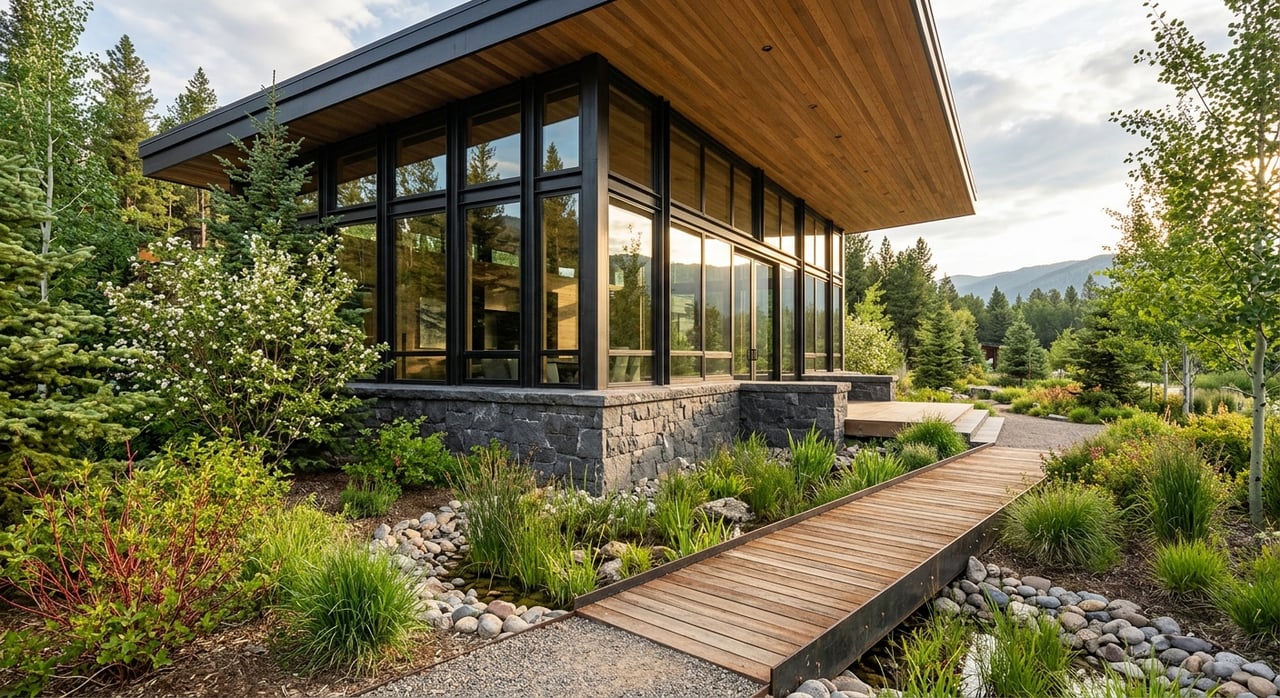
What Developers Should Know About McCall Resort Communities
June 11, 2026
June 11, 2026
If you approach McCall like a standard subdivision market, you may miss what actually drives value here. This is a destination market shaped by seasonal demand, second-home ownership, recreation, and a planning framework that puts conservation and access front and center. If you are evaluating land, planning a new community, or refining a go-to-market strategy, understanding those local signals can help you make sharper decisions from the start. Let’s dive in.
McCall is not a conventional growth story built around year-round local demand alone. The city reports about 3,100 year-round residents, yet that number can more than triple during summer months and holidays. Add in strong winter traffic, including more than 60,000 visitors during Winter Carnival, and you get a market where seasonal use has a direct impact on development strategy.
The broader Valley County profile supports that picture. The county reports 11,746 residents, an 81.9% owner-occupied rate, a median owner-occupied home value of $657,000, and a population where 28.3% of residents are age 65 or older. In practical terms, that points to a buyer pool that often includes second-home households, active retirees, and regional buyers looking for four-season use rather than only primary-residence demand.
Access also reinforces McCall’s destination identity. McCall Municipal Airport accommodates general aviation, business jets, and U.S. Forest Service traffic, but it does not offer scheduled commercial service. For developers, that means buyer convenience matters, but so does the strength of the on-site experience once owners arrive.
In McCall, entitlement risk is not something to sort out later. The city identifies the 2018 McCall Area Comprehensive Plan as the primary planning policy document for the city and its area of impact, which extends around Payette Lake, west to Club Hill Boulevard, and south of Elo Road. If your site falls within that lens, land use assumptions should be tested carefully and early.
The shoreline and river environs overlay district is especially important. The city states that this overlay is designed to protect water quality, fish and wildlife habitat, viewsheds, and public visual and physical access. That tells you something important about local approvals: a project is more likely to be judged on how well it fits McCall’s environmental and access priorities, not just on unit count or product type.
Stormwater is another key issue, especially near the lake. The city’s stormwater program requires certification for shoreline projects, and construction near Payette Lake is monitored by the Big Payette Lake Water Quality Council. For a developer, this raises the importance of site planning, engineering coordination, and realistic timelines before the marketing story is ever written.
In many resort markets, conservation is used as a branding layer. In McCall, it reads more like a baseline expectation. The city’s 2023 Parks, Recreation and Open Space Plan calls for preserving adjacent Idaho Department of Lands property, improving access to Payette Lake and the Payette River, building interconnected trails and greenways, conserving natural areas, maintaining the urban forest, and protecting the night sky.
That matters because buyers in destination communities are not just buying a lot or home. They are buying a relationship to the landscape. In McCall, projects that support stewardship, trail connectivity, and water-quality protection are likely to feel more authentic to the market than projects that simply emphasize density or square footage.
Public access is already part of the local experience. Art Roberts Park, Brown Park, and Rotary Park provide beaches and public docks, while Ponderosa State Park adds lakefront campsites, cabins, boating access, trails, Nordic skiing, and day-use recreation. New communities do not enter a blank slate here. They enter a town where access to water and recreation is already part of the identity.
Existing communities offer a useful map of what works in McCall. They also show that this is not a one-size-fits-all market. Product succeeds when the positioning is clear and the amenity story matches the site.
Whitetail Club is one of the clearest examples of a private mountain-lake community in McCall. It spans 1,300 acres and includes a strong amenity package, with official materials describing a 17,000-square-foot lakefront clubhouse, a full-service marina, golf, a Fish and Swim Club, 10 miles of single-track biking, and 20 kilometers of Nordic skiing.
Its 2024 Legacy Ranch release added 36 lots across more than 365 acres, with homesites starting from $400,000 to $1.375 million. That tells developers two things. First, buyers in McCall will pay for a layered lifestyle offering. Second, lot pricing can move well beyond basic land value when the community narrative is complete and clearly matched to a multigenerational, year-round use case.
River Ranch sits on the lower-density, conservation-forward side of the market. The community reports 458 acres, 2.5 miles of Payette River frontage, five lakes, 7.5 miles of trails, and about 80 acres of conservation area, with just 64 homesites overall.
That ratio of land to homesites is worth studying. It suggests that in McCall, scarcity and acreage can be central to absorption when they are paired with a strong natural setting and disciplined release strategy. The fact that phases I and III are sold out, with phase II now releasing 4- to 5-plus-acre homesites, reinforces the idea that tightly curated product can outperform broader commodity-style rollout.
Jug Mountain Ranch offers another useful model. The ranch spans 1,410 acres, preserves roughly 1,000 acres of open space, and plans for 325 homesites at completion. It also combines residential appeal with a public 18-hole championship golf course, Nordic skiing, snowshoeing, and trails.
Its location, about 10 minutes from downtown McCall and Payette Lake, is part of the lesson. Buyers often want seclusion, but they do not want isolation. Communities that can deliver privacy, open space, and practical access to town may have a stronger edge than projects that lean too hard in only one direction.
Tamarack Resort represents the more integrated, higher-density end of the regional resort spectrum. Official materials describe 3,500 acres of recreation, 1,610 acres of skiable terrain, 2,800 vertical feet, Nordic and snowshoe trails, golf, and a Lake Cascade marina that opened reservations to the public in 2026.
Its product mix includes condos, chalets, cottages, and estate homes. For developers, Tamarack is a reminder that some buyers want a resort-village environment with a broad menu of amenities and housing choices, while others prefer larger parcels and more privacy. McCall’s market can support multiple formats, but each one needs a clearly defined buyer profile.
In McCall, the strongest projects usually answer three questions clearly.
Access can mean lake access, trail connectivity, golf, skiing, marina use, or proximity to downtown and recreation. It should be concrete, not vague. A buyer in this market is often comparing the everyday experience of one community against another, not simply comparing lot sizes.
Conservation should be visible in the land plan, not buried in the brochure. Open space, habitat sensitivity, trail preservation, night-sky protection, and water-quality stewardship all align with local priorities identified by the city. If those elements are weak, the project may feel out of step with McCall even if the homes are well designed.
That is the narrative test. A project should make sense in relation to place, whether that means river frontage, lake orientation, mountain access, trail integration, or a specific privacy profile. If the story could be copied and pasted into any other market, it probably is not strong enough for McCall.
McCall’s current competitive set points to a ladder of product, not a single price band or development style. On one end, you have large private club or conservation-forward homesites. On the other, you have more integrated resort formats with varied housing types. In between, communities can succeed by balancing open space, recreation, and access.
For underwriting and release strategy, that suggests a few practical takeaways:
The local evidence supports a disciplined approach. Whitetail’s lot pricing, River Ranch’s phased scarcity, Jug Mountain’s open-space identity, and Tamarack’s resort variety all show that segmentation matters in this market.
In McCall, value-add is not only about adding more units. In many cases, the stronger opportunity may come from improving the story and usability of the project. That could mean strengthening trail connections, clarifying access to recreation, refining the conservation narrative, or better matching product type to the likely buyer.
This is where a strategic development advisor can make a measurable difference. In a market like McCall, pricing, positioning, absorption, and buyer targeting are tightly connected. If those pieces are fragmented, the project can lose momentum even when the location is strong.
For developers, the goal is not just to launch inventory. It is to present a community that feels authentic to McCall and legible to the buyer. That requires market fluency, a grounded pricing strategy, and a clear understanding of what this destination market rewards.
If you are evaluating a resort-community concept, repositioning a homesite release, or building a go-to-market plan in McCall, working with an advisor who understands both lifestyle and absorption strategy can help you make more confident decisions. To start that conversation, connect with Cheri Reeves.
Stay up to date on the latest real estate trends.
Reeves Group brings decades of combined experience, deep local insight, and a global perspective to McCall and its surrounding mountain communities. Led by Designated Broker Cherí Reeves, our team takes a strategic, relationship-driven approach to buying, selling, and investing. Known for discretion, market expertise, and thoughtful guidance, we help clients navigate opportunities and complex transactions with confidence and clarity.